

Guns and protests
As the temperature rises and political violence is in the air, Las Cruces discusses why two demonstrations, held on consecutive days at the same location, were policed differently.

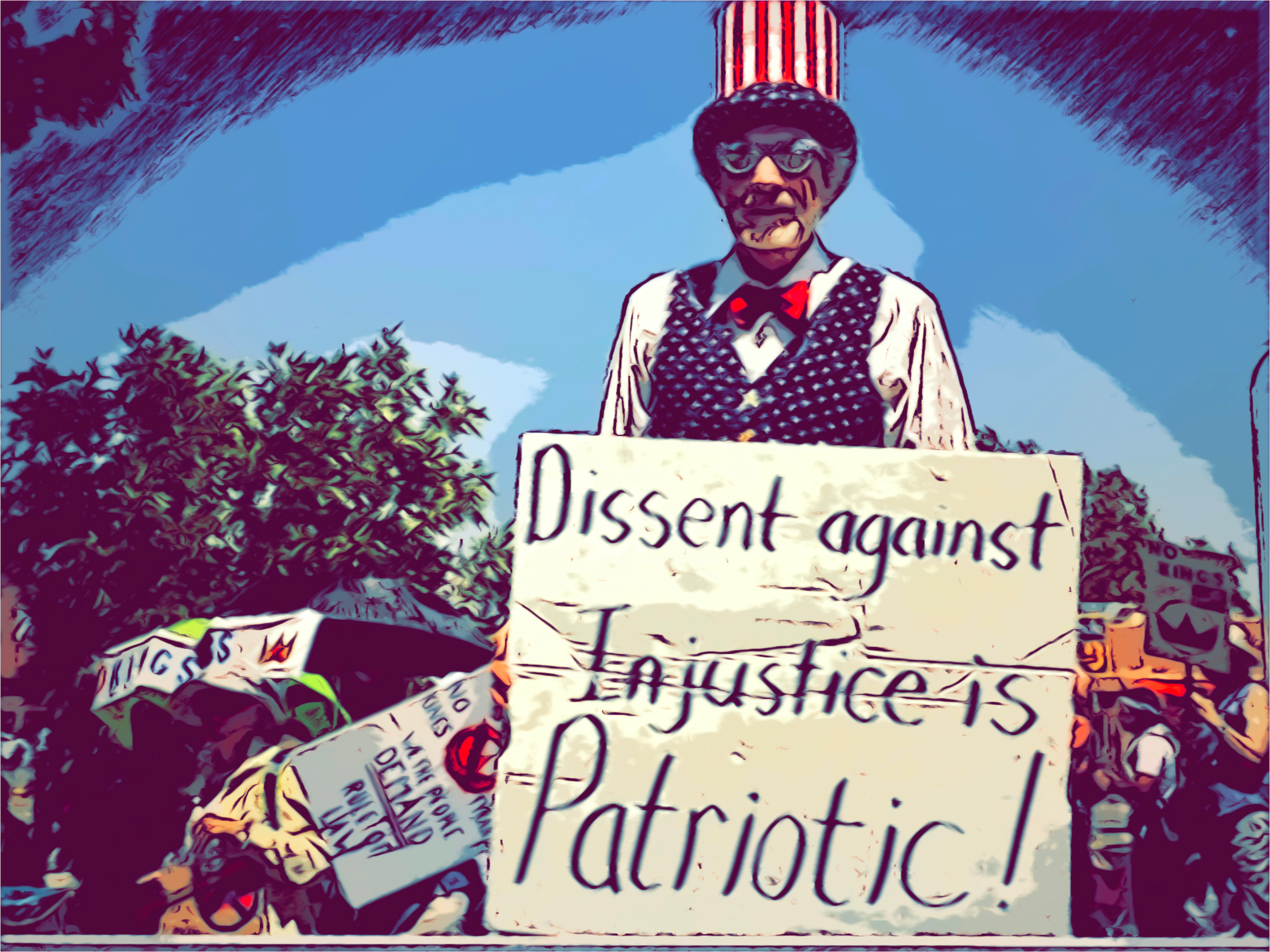
“Lock and load. Time to end this Marxist insanity.”
“Keep your Powder Dry and stay Locked and Loaded. Time for ANTI-Protests against these Losers!!”
“I’ll be attending the rally in Las Cruces. Anyone know where I can buy bear spray and a confederate flag before Saturday?”
There were many comments in that vein on Piñon Post, a political blog maintained by John Block, a Republican state legislator from Alamogordo. (The threats remained live on the website as of Sunday morning.) The commenters wished harm on those who would participate in the “No Kings” protests on June 14, some naming the Las Cruces protest specifically.
The comments were in response to a post with a headline claiming organizers were planning “riots.” If it was not written by Block, it was at least approved by him for publication. Consistent with the headline, the article framed the demonstrations themselves as a threat to public safety:
“Radical leftist agitators are planning a series of coordinated demonstrations across New Mexico on June 14, targeting President Donald Trump with what they’re branding as ‘No Kings’ protests. But what organizers portray as ‘peaceful protests’ have all the hallmarks of the kind of far-left mob activity that has already sparked violent insurrections in places like Los Angeles, where criminal aliens and anarchists recently clashed with federal law enforcement officers.”
“To all patriots LOCK AND LOAD,” replied a commenter identified as James Bundy.
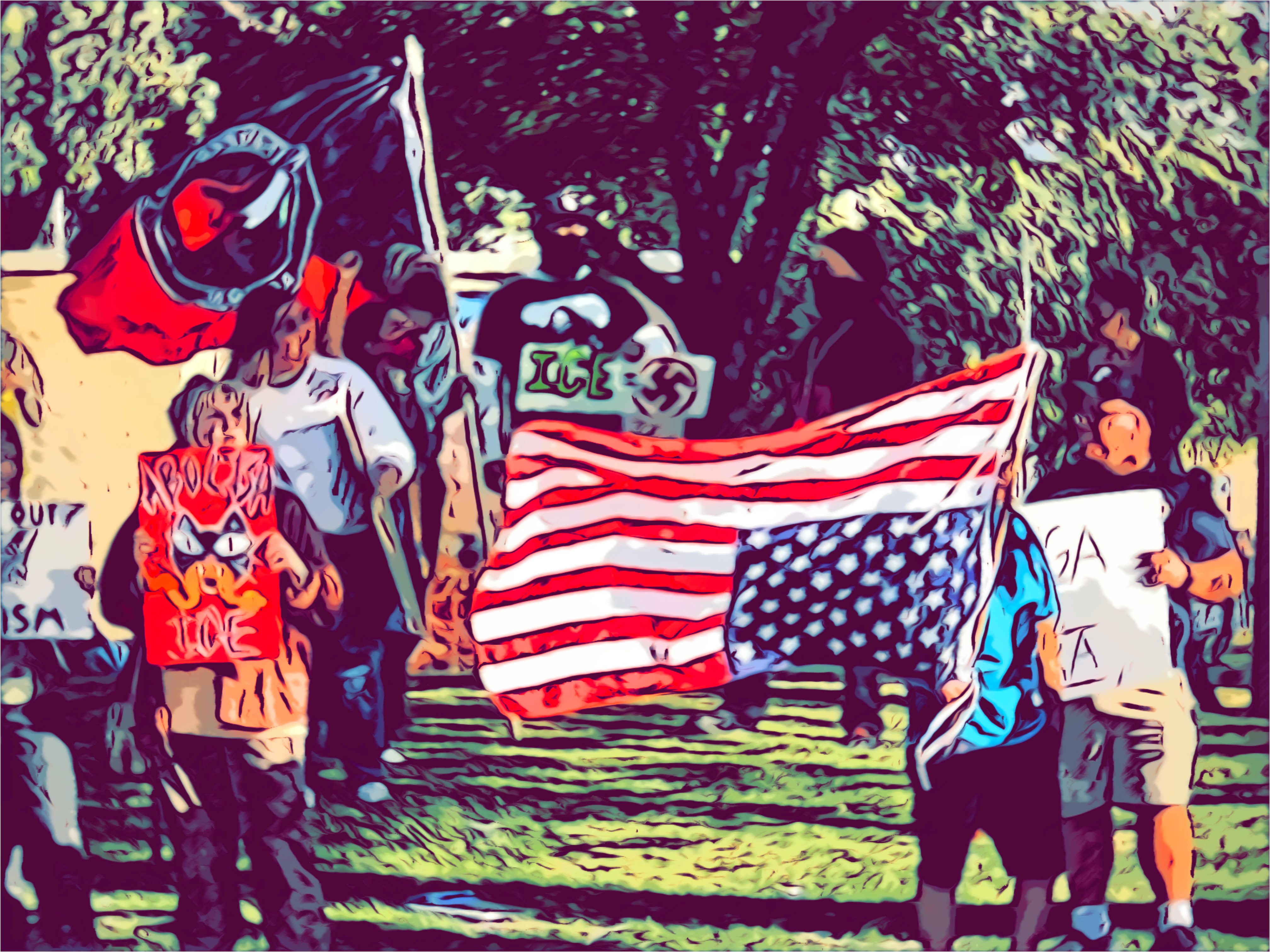
The night before “No Kings,” a smaller, informal demonstration gathered at the same location: A city park located next to Las Cruces City Hall, and right across the street from police headquarters. A couple of hundred people, by my count, gathered to protest anti-immigrant policies and ICE’s escalating arrests and assaults by individuals who are masked and show no identification, making it impossible to verify that they are indeed law enforcement officers.
I hung out in the park and observed the protest. The atmosphere was spirited and cheerful. People brought children who ran and played on the grass. Drums, chants, home-made signs (“Melt ICE!”), protestors cheering and waving to cars passing through the downtown intersection of Picacho and Main, spurred on through shouts into a megaphone that was passed around. Chilled bottles of water and bite-sized morsels of watermelon were distributed like hors d’oeuvres, as triple-digit heat hung on into early evening.
Then came ripples of mild alarm as people noticed and pointed out an LCPD officer setting up in a sniper position on the roof of the fire station across the street. Through the megaphone, a man encouraged the crowd to wave to the officer. Reactions varied from humor to worry to anger.
My own initial thought was, “Jesus, it’s got to be hot up there.”
That officer soon left the fire station, but then a sniper (same officer? impossible to tell) was spotted on the roof of the police station. And another on the roof of the public library adjacent to the park, who set up on the balcony over the entrance, lying on his stomach behind his rifle. A participant would later report that when she asked him what he was doing there, he told her to “fuck off.” A buzz went through the crowd that police were aiming rifles at the protestors. A few people left, saying they felt unsafe.
In the wake of the back-to-back demonstrations, LCPD Chief Jeremy Story would explain that the sharpshooters were there because of online threats, as in the Piñon Post comments. Police were there to protect protestors and respond to any assault, he said, and while the comments appeared to be directed toward the larger “No Kings” demonstration on Saturday, it was reasonable to consider Friday’s smaller demonstration as a potential target as well.
Whence this feeling of danger?
Staging SWAT officers including snipers at high-risk events is not new; but it felt unusual for Las Cruces.
The last time I saw rifles anywhere near a civil protest here was when self-appointed militia groups were showing up at local George Floyd protests in 2020. They styled themselves as volunteer citizen peacekeepers, but they were rooted in far-right extremism. One such group, the New Mexico Civil Guard, posted Facebook messages about dangerous “Marxist” radicals in terms similar to the post on Block’s website. They had a penchant for showing up armed to “keep the peace,” while heightening a sense of menace and danger around citizens exercising their constitutional rights to assemble and express dissent.
But those groups were not commissioned law enforcement officers and not accountable to the public (although the NMCG was later sued pretty much out of existence by the state Attorney General).
Grazing through news stories, it seems Las Cruces is not the only community noticing a stronger tactical presence at demonstrations. An almost identical incident took place in April in an Idaho city: The protest was in response to a police shooting, two snipers were positioned on a rooftop and the city said it was because the FBI had passed along information about threats against protestors. Last year, policing of Gaza solidarity protests on university campuses, including visible snipers, drew criticism and fears of student demonstrators being shot à la Kent State in 1970.
When I took part in Occupy Las Cruces demonstrations at this same park in 2011, LCPD officers walked across the street to say hello, ask who was in charge and what our plans were. As it happened, the worst danger we presented was allowing an occasional unsecured tent to blow into traffic.
This time, however, no officers walked across the street and introduced themselves. The only visible presence of LCPD took the form of officers looking through rifle scopes. Citizens who are not familiar with this kind of presence wondered if the weapons were being aimed directly at them. An “ACAB” contingent within the community assumed the intent of the police presence was not safety at all, but to intimidate protestors based on the content of their speech.
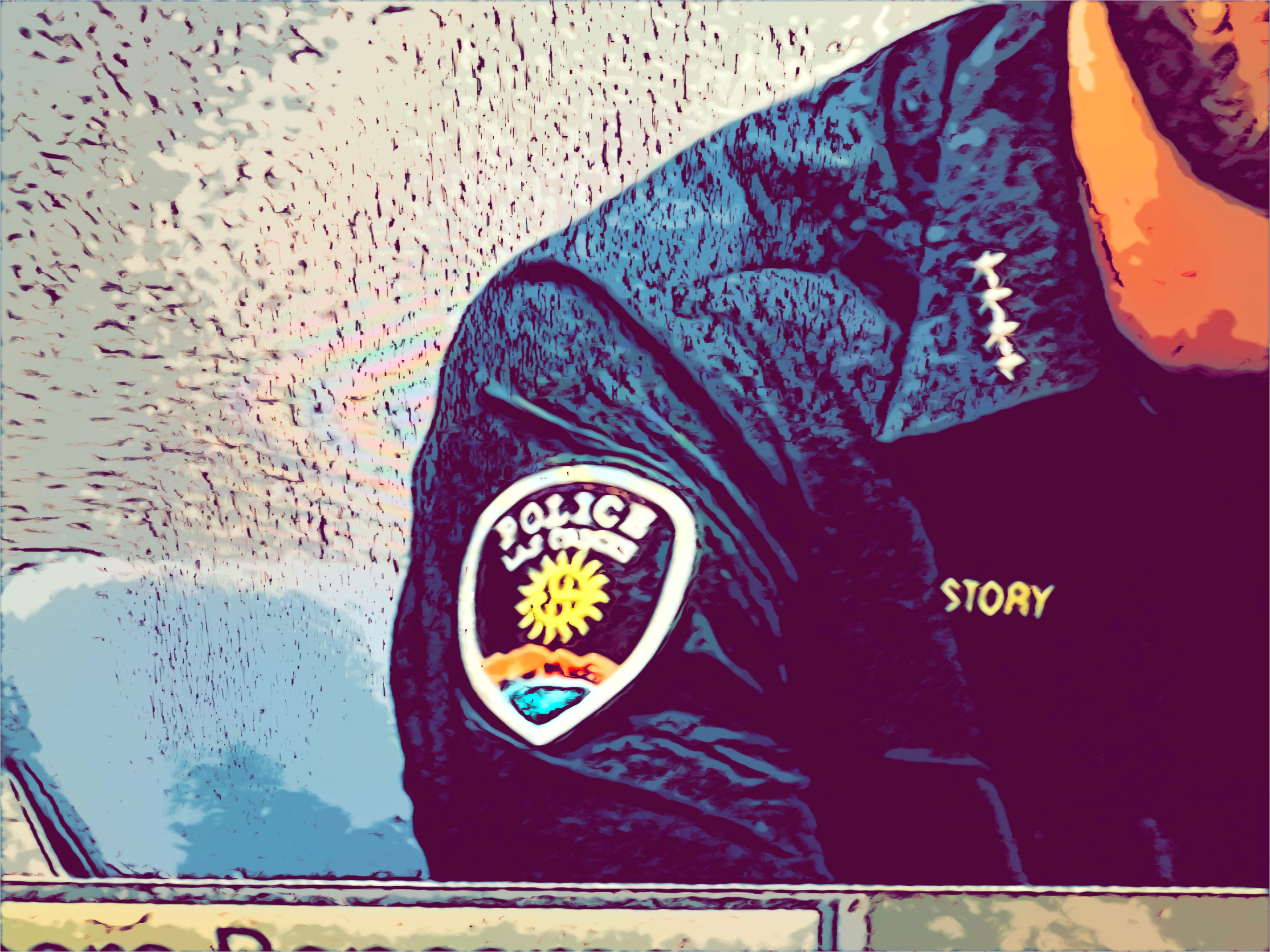
Before city council the following Monday, Story admitted that the two protests were treated differently, attributing it to the fact that the “No Kings” organizers obtained a permit and therefore had a line of communication with an LCPD lieutenant. The organizers, Indivisible Las Cruces, confirmed this line of communication when I observed their demonstration on Saturday.
For that one, the one specifically targeted in online threats, I saw no snipers in position, though they might have been better hidden. There were police officers on the ground, saying hello to protestors and keeping watch.
An opportunity for dialogue
But it wasn’t just about permits. There are different subsets of activists in Las Cruces, with different views and relationships with police.
It’s hard to understand why no one was available to walk a few hundred feet from police headquarters to Friday’s event (like they did when Occupy Las Cruces showed up unannounced), maybe have a bicycle officer roll through, and say something to the effect of, “Hey, there are some threats out there, so we’re going to be taking some positions, here’s my card, stay safe, drink water.”
A trace of this might go back to Gaza solidarity protests on the local college campus in 2024, when LCPD were called in to New Mexico State University to deal with a sit-in at an administrative building.
The university might have let the sit-in play out, since the business day was over and the group really wasn’t obstructing anything by sitting in the lobby, singing songs and speaking about the war. At the time, there was a good deal of misinformation and fear being ginned up about the people protesting Israel’s bombardment of civilian targets in Gaza, antisemitism and protestors’ dangerousness (again, much like the Piñon Post article mentioned above).
Anyway, LCPD and state police were called in and ultimately they arrested a dozen people as I watched. Some folks cooperated, while others went limp and were carried off. A few pushed the limits further into resisting-and-evading territory. I observed someone spitting at police. I also watched a couple of rough takedowns, including someone who got clocked in the head pretty hard as he was — to use a phrase favored in police reports — “escorted to the ground.”
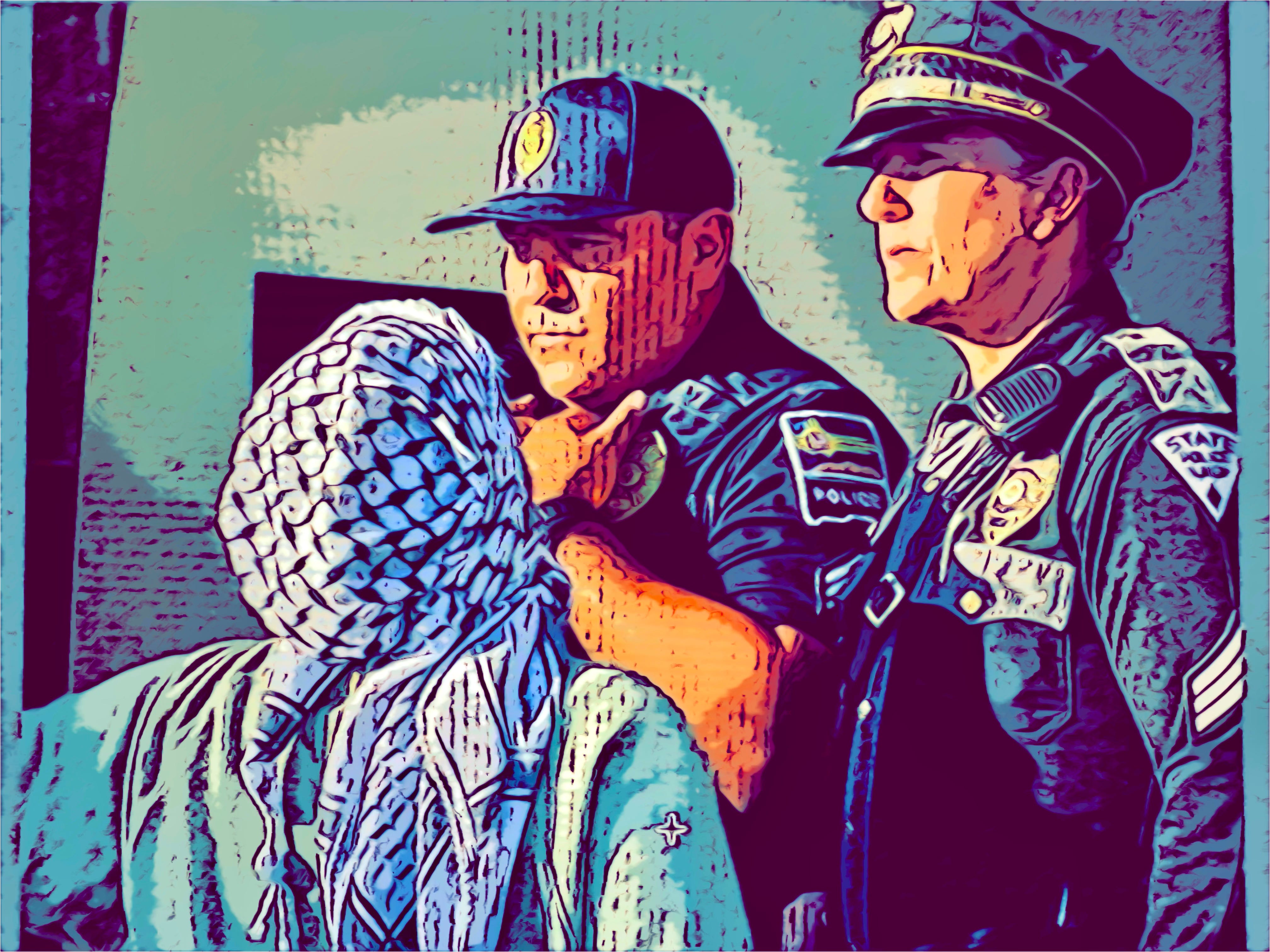
I’ve seen worse at protests, but this got a tad dangerous. Anti-police sentiments increased in pitch as the law enforcement response moved from observation to dispersal to arrests. Why was any of this necessary, I wondered.
Story didn’t mention the Gaza protests or that bad day at NMSU. Yet many of the faces from that day were also present at the June 13 demonstration, as well as the city council meeting where a lot of public comments criticized LCPD about the snipers.
Story spoke of anti-cop sentiment while discussing the demonstrations:
“A lot of the people who spoke…are people who despise us and probably will regardless of what we do. And our intention was to be there to protect them, primarily, and respond to any threats that should arise. The comments that were made online were directed potentially to Saturday but for us to make that assumption, that Friday was free and clear, I think would have been foolish. … We will continue to protect people, even people who dehumanize police officers and say all cops are bastards. We’ll be there for them when they call and we’ll still respond and we’ll still protect them regardless of their views.”
There seem to be grounds here for someone to facilitate dialogue between LCPD and protestors. Under the Trump administration, there are clearly going to be more occasions for civil demonstrations and interactions between protestors and police.
Political violence heating up
We also know that threats to such demonstrations are real.
In New Mexico, we remember how Jacob Johns was shot and nearly killed at a peaceful gathering in Española in 2023 by Ryan Martinez (wearing a red MAGA cap). Johns is now pursuing civil action against county officials, including law enforcement who left the scene shortly before Martinez reached for his gun.
And memories are still fresh of Scott Williams being shot and injured by Steven Ray Baca at a 2020 protest outside the Albuquerque Museum — where, yes, the New Mexico Civil Guard was present in the midst of the chaos. (Baca was not a member of their group.)
In life, as opposed to movies, gunshot wounds are life-changing.
Just ahead of the demonstrations, a Minnesota lawmaker was assassinated along with her husband, and another lawmaker and his wife were wounded, by a man disguising himself as a police officer.
At a “No Kings” gathering in Salt Lake City, a threat of gun violence was followed by the fatal shooting of a bystander. In Culpeper, Virginia, a man drove his SUV into a crowd of people leaving the demonstration.
In Las Cruces, a pseudonymous X account reported that his “MAGA Flag” had been stolen from him by protestors as he displayed it from his car at the intersection, with a photograph of a scrape on his arm. I did not witness that. From what I saw the mood was joyous, outraged and optimistic.
And the police on scene appeared to be alert though not visibly stressed — and hot.
We can be sure there will be more demonstrations as the effects of mass removals, the revolt from within at the U.S. Health and Human Services Department, trade tariffs and other drastic policy decisions continue to hit home for Americans.
And the sentiment that wishes harm to those protestors, while simultaneously framing them as the threat, isn’t going away.
Citizenry and local police will continue to confront that problem together.
Some recent bottles of sand
“Accused Las Cruces City Hall window smasher released ahead of trial” (June 20)
“'Freedom is for everyone': Sun shines on Las Cruces Juneteenth celebration” (June 19)
“Accused Las Cruces stoplight shooter to be held through murder trial” (June 18)
A very informative report. It seems to also include suggestions that could bring peaceful peotesters and law enforcement closer together
Alerting the public to sites suggesting violence can help too.
The disparities between the Friday and Saturday rallies have not been explained. There is no way to connect permitting or lack of it with a police presence Friday and a police absence on Saturday. The threats aimed at Saturday's rally had nothing to do with permits, and the permits were no protection against those threats. Story just tells stories.