

Method, madness, and nonsense
On acting, a key failure of entertainment journalism, and why it's perfectly OK to criticize Marlon Brando

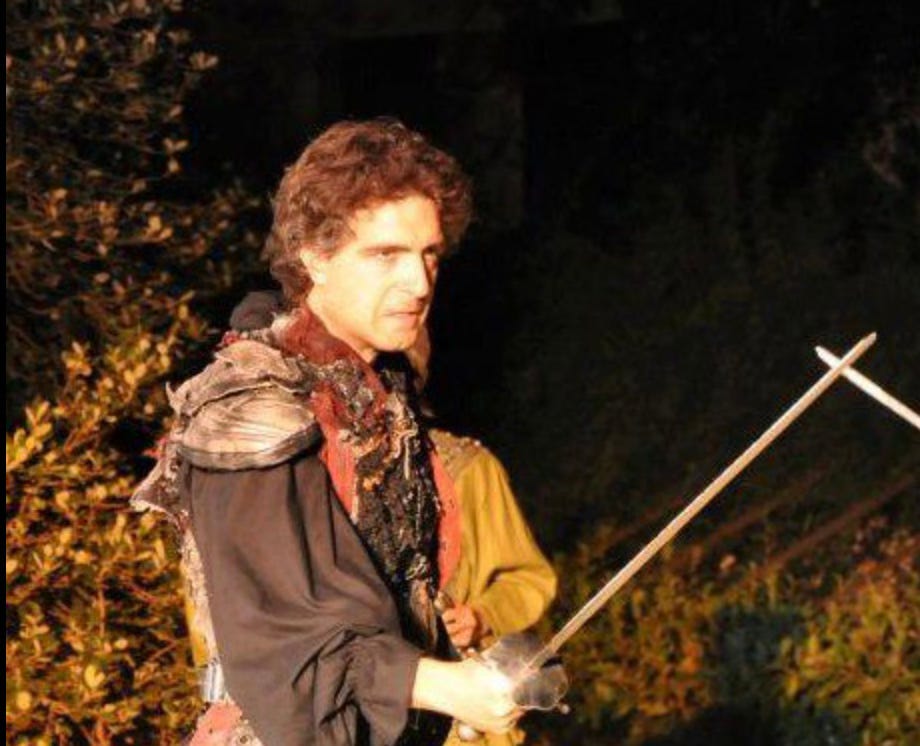
Madness
When entertainment journalism turns its beady eyes on the actor’s craft, I reach for my dagger. Before I get into that, let me tell you about a guy who liked to throw chairs at me.
It was a small stage in Los Angeles with audience members just feet away. The year was 2005. My fellow actor had little in the way of training, experience or artistry; worse, he had latched on to the idea that the path to a memorable performance was to be out of control and wild, much like the character he was portraying.
The director spoke to him but the actor was resolute. During performances he leaped at me, swatted me, threw props and furniture. I was on stage not with a wild animal but a flailing jackass.
Another time, there was the actor in New York, circa 1993, who kept dropping our fight choreography and smacking me for real because, he said, he was carried away by his animosity toward my character. The cast prevailed on him to stop and the director threatened to report him to Equity (he was in the union). Somehow he found the means to perform without landing real blows.
These people were buffoons but similar pathologies played out elsewhere in worse ways. A notorious instance took place at the Profiles Theatre in Chicago, when the antics of actor Darrell W. Cox became the focus of a 2016 exposé by the Chicago Reader:
The reason “Killer Joe” felt so vicious and so real was because it was. All of it: the choking, the bruises, the deep-throating of a chicken leg, the body slam into the refrigerator, Cox’s groping of (Claire) Wellin through her dress as Joe attempts to seduce Dottie, Cox’s semi-erection at the beginning of Act II after Joe succeeds. “It was real,” says Darcy McGill, the costume designer, “because there was a psychopath onstage.”
The acting field was a wilderness. Perhaps it is, still. There were reputable teachers and studios, theaters that did their work professionally, acting companies that got along well enough and did good work; yet many charlatans and aspiring gurus presented themselves as teachers, directors, and managers. An acting teacher surrounded by loyal disciples is a powerful figure, and there were studios that were effectively cults. Moreover, the prized Equity card was no guarantee that actors knew what they were doing or were healthy.
I was fortunate enough to find good teachers and peers, but I witnessed or experienced weird, harsh things along the way.
Method
Theatrical style varies widely: Tennessee Williams is not Shakespeare, and Shakespeare is not Suzan Lori-Parks, who is not Caryl Churchill, and Caryl Churchill is not Tony Kushner.
No actor can do everything, but they need to be fluent in a variety of approaches for different modes of dramatic performance, on top of core competencies in physical movement, vocal production, choreography and physical strength that take years to develop and deteriorate without practice.
The famous “Method” — referring to a set of techniques and ideology developed by a cohort of American teachers inspired by the Russian artist Konstantin Stanislavski — dominated how American actors were taught in the 20th century and has become a caricature. Teachers Lee Strasberg, Stella Adler, and Sanford Meisner developed schools with distinct approaches to developing emotionally truthful performances.
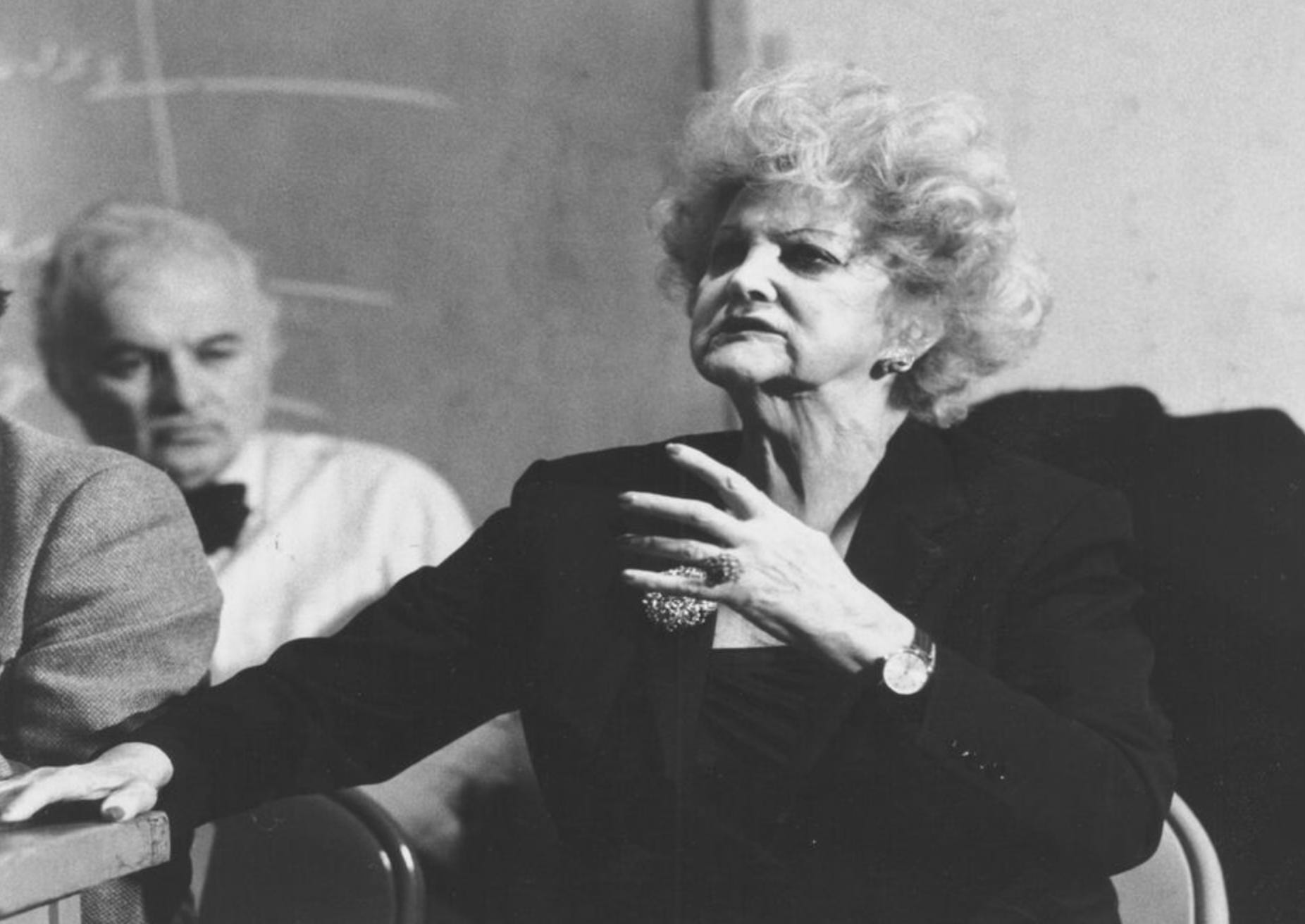
Meanwhile, their less well-known peer, Bobby Lewis (who taught my own mentor, Brian McEleney) critiqued the “Method” as a distortion of Stanislavski and laid out a versatile, less rigid and more imaginative approach to the craft. A pivotal set of lectures he gave on acting were published in book form as “Method — or Madness?,” which is still a useful read.
(Two other books on acting I recommend in this vein are “The End of Acting” by Richard Hornby and “The Invisible Actor” by Yoshi Oida.)
Over the decades, teachers marketed themselves and their own approaches and systems, while others taught “Strasberg,” “Adler,” or “Meisner,” in a manner with parallels to church denominations or sects. Students sometimes wore their technique as a point of pride and ideological commitment. A good many actors I encountered were highly performative about their rehearsal techniques and performance prep. It became a kind of self-assertion, a play for attention, while others were content to connect with their fellow players or stretch and vocalize on their own.
It’s OK to criticize Marlon Brando
Marlon Brando, who died in 2004 and whose last completed film was released nearly 25 years ago, still seems to be the icon of the “Method actor,” which means his quirks and excesses are, perhaps unfairly, attributed to “Method acting.”

We can be sure Stella Adler never taught Brando to dispense with studying dialogue or reading a script before showing up on set: These were Brando’s own notions of rawness or something. It was also unprofessional behavior. The time spent on a film set accommodating these antics costs money, distracts other people from their jobs and contributes to pernicious asshattery about the actor’s craft.
Yet Brando is still somewhat untouchable. In her recent interview with the New York Times, during a critique of Brando and “Method acting,” Kristen Stewart felt the need to say, “I’m not coming for him.”
The interview was released after I had started writing this essay. (The podcast is behind a subscriber paywall but a YouTube version with ads is available.)
Stewart said, “Performance is inherently vulnerable and therefore quite embarrassing and unmasculine. There’s no bravado in suggesting that you’re a mouthpiece for someone else’s ideas. It’s inherently submissive. Have you ever heard of a female actor that was Method?”
From my own observations, I’d answer no, not exactly, while noting that some female actors did make a spectacle of their technique or their vulnerability. I would concur with Stewart that men are more often praised and admired for this whereas women risk being characterized as “crazy.”
More from Stewart:
There’s a common act that happens before the acting happens on set: If they can protrude out of the vulnerability and feel like a gorilla pounding their chest before they cry on camera, it’s a little less embarrassing. It also makes it seem like a magic trick, like it is so impossible to do what you’re doing that nobody else could do it.
I suspect there are more factors behind some of the excesses of Method acting. It may have something to do with control (“My character would never do that!”) or assertion of self, but I’m not sure that explains pedantry in the name of “truth,” such as when Lee Strasberg got upset about the color of his socks for a scene in “The Godfather Part II” (1974), even though his socks were not in the shot. What I see as pedantic, some acolytes would regard as superior professionalism.
Status and setting matter here as well. When you are a star actor on a movie set, or an actor gifted with a nine-week rehearsal process for a single play on an Equity contract, there is much more accommodation of actor preciousness. When you’re doing summer stock, and your rehearsal period might be a week, or a touring performer on a tight schedule, actors just have to get on with it. Ready, set, go.
So I’ll go after Brando: not despite his renown and artistic achievements on stage and screen, but because of them. In his late 20th century career, it was Brando’s status that allowed him to pass off a lack of preparation and professionalism as some kind of genius.
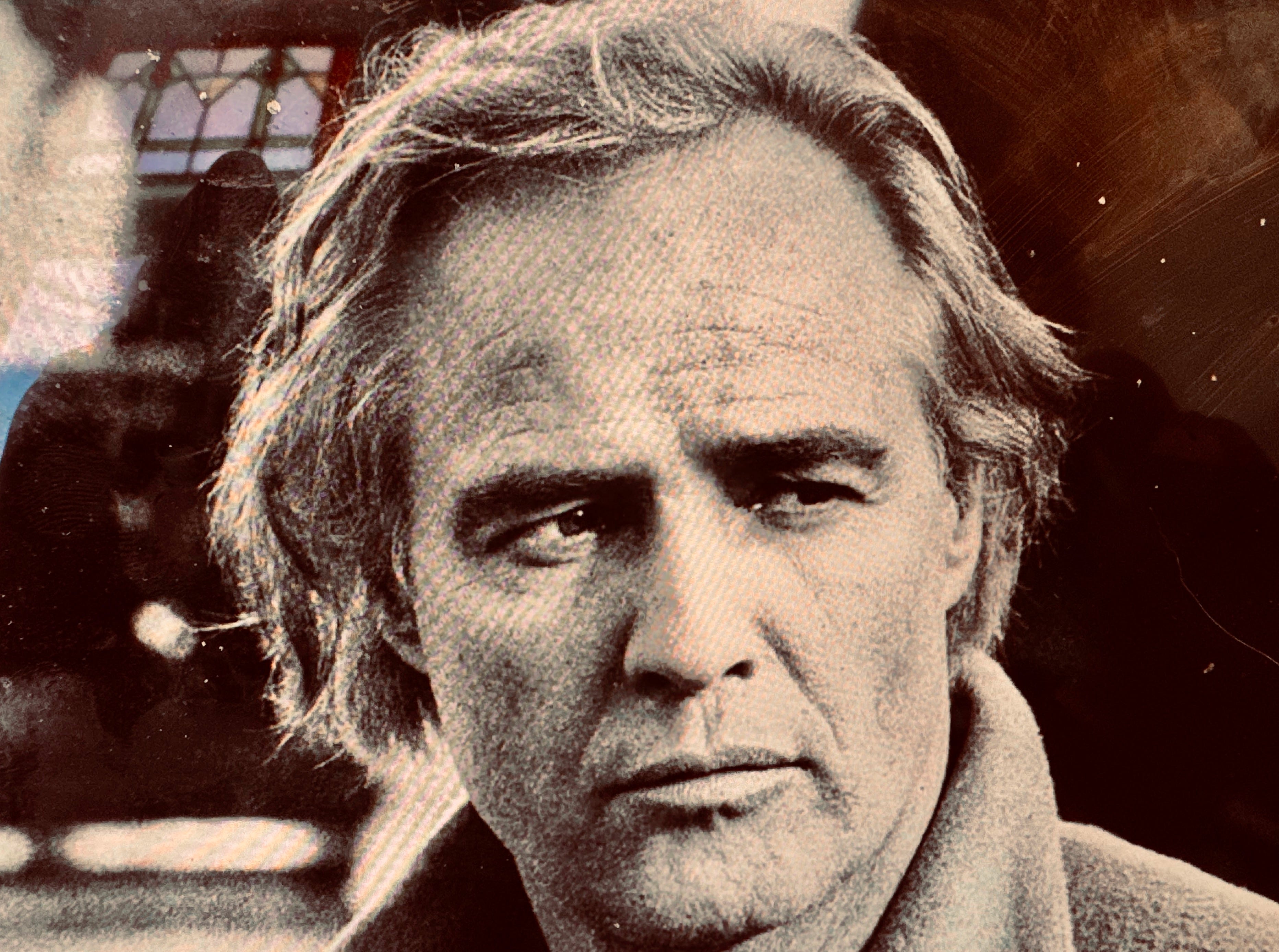
His participation in the humiliation of 19-year-old co-star Maria Schneider for a scene in “Last Tango In Paris” (1972) because director Bernardo Bertolucci “wanted her reaction as a girl, not an actress,” is grist for an essay on its own. It also foreshadows what happened with Cox at the Profiles Theatre and numerous other abuses in the name of “THEATAH!!”
For today, I will assert that one of Brando’s best-known performances, as Col. Kurtz in “Apocalypse Now” (1979), owed more to film editing than the actor himself.
The great Method actor famously showed up on set unprepared, despite being highly paid for limited days on set, and insisted on improvising his dialogue. Reportedly he had not even bothered to read the script. The editors finally assembled a scene from hours and hours of footage of aimless improv between Brando and Martin Sheen, some of which appears in the documentary, “Hearts of Darkness” (1991).
The stories of Brando refusing to learn his lines and forcing people, including fellow actors, to wear cue cards, requiring camera crews to steer around this nonsense, are an embarrassment to the profession, notwithstanding his groundbreaking performance on stage and screen in “A Streetcar Named Desire” (1951) and other achievements.
There, I said it.
And while I’m at it: Vaffanculo, Bertolucci. What you did to that young woman was as wrong 50 years ago as it is now. You and Brando were nominated for Oscars, Golden Globes, DGA — and Schneider suffered the rest of her life. Fai schifo.
Drunkenness is not Method
I am capable of ignoring most of the crappy clickbait stories about actors behaving badly, but when entertainment reporters at serious outlets conflate toxic social behavior, addiction and pathology with the craft of acting I can’t help raging.
Jared Leto being creepy toward his fellow actors while filming “Suicide Squad” (2016) is not “extreme Method acting,” as proposed by numerous internet articles.
Leto once explained sending used condoms as gifts to fellow actors as an effort “to create an element of surprise, of spontaneity, and to really break down any kind of walls that may be there.”
Horseshit. This is not acting. No journalist writing about acting should confuse this with consensual interactions in which actors sometimes explore dark emotional places and ideas through improvisation.
It would be wonderful to see more high-quality journalism about the performing arts on the prominent news platforms, but alas, so much of it is Hollywood chisme and celebrity churnalism.
Another unhealthy trope that crops up again and again is that of the actor disappearing into their character and forgetting who they are. Social media posts propound the myth that Heath Ledger’s untimely death in 2008 at age 28 was somehow attributable to his remarkable, frightening performance as the Joker in “The Dark Night,” which came out the year of his death, as if the darkness of the role overtook his soul.
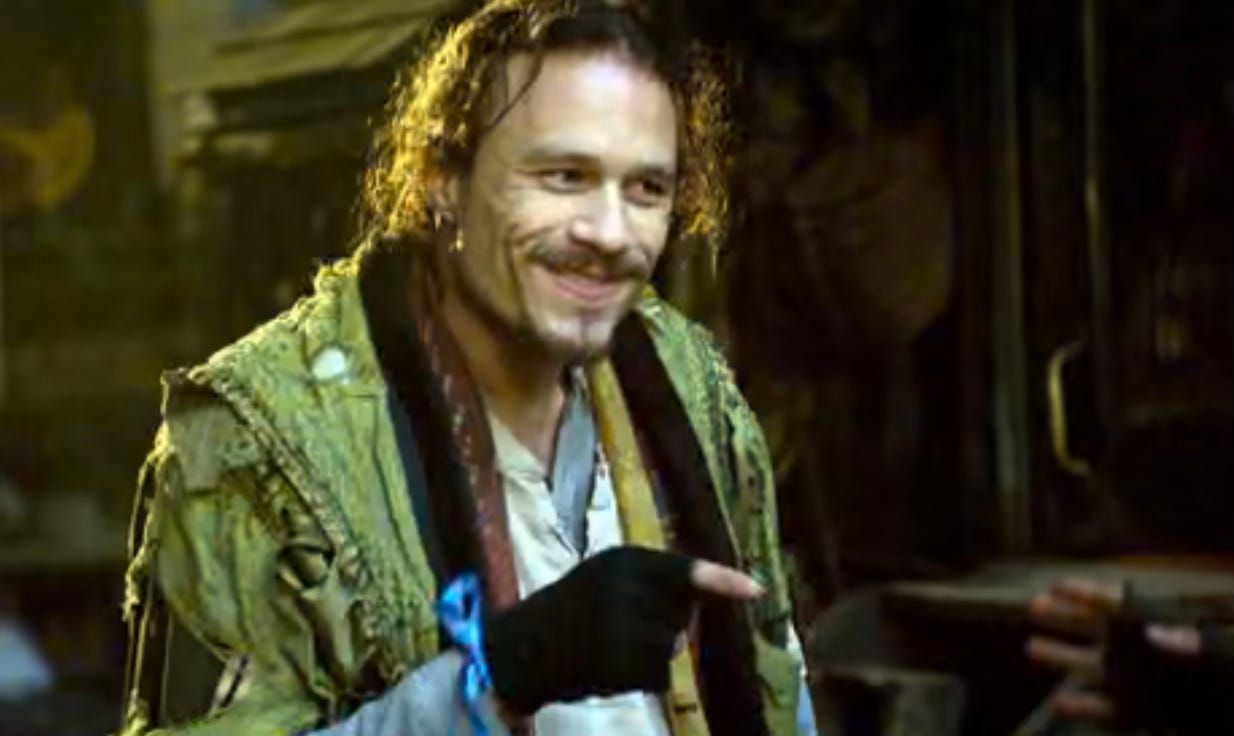
It’s sort of romantic if you don’t think about it too much; but it’s twaddle, in light of known facts and statements by his coworkers. Ledger overworked, he had had substance abuse problems, he became ill while shooting a post-Batman movie, he was complaining about his long-standing insomnia, and one night he overdosed on prescription medication. It seems to have been a sad, ordinary accidental death, not a fictional character forcing its way into the artist’s psyche and destroying him.
Actors who aren’t in need of hospitalization do not forget who they are. On stage, there are lights in your eyes, things going on in the wings, props that go missing, and someone with an irritating hyena laugh in the third row. On a film set, you’re trying not to trip over a light stand, your eyes are stinging from makeup and you are silently daring that asshole director to make you do another take before you get to eat something.
Most recently, it was The Guardian, turning out a story about an interview in which Colin Farrell confessed to showing up to film “Minority Report” (2002) so drunk he could not work, reportedly needing nearly 50 takes to get through his dialogue. Farrell later addressed his substance abuse, and more power to him.
Then the writer, Catherine Shoard, pivots to popular tales of performers who got on stage or in front of camera crews shitfaced and describes this behavior as “Method acting.”
…Many actors have shot scenes in which they’re meant to be drunk while actually drunk, in an attempt at authenticity.
This is not authenticity. It’s the erasure of acting.
When I made my living as a stage performer, I occasionally met actors who turned up drunk or stoned. It neither improved their performances nor enhanced workplace safety.
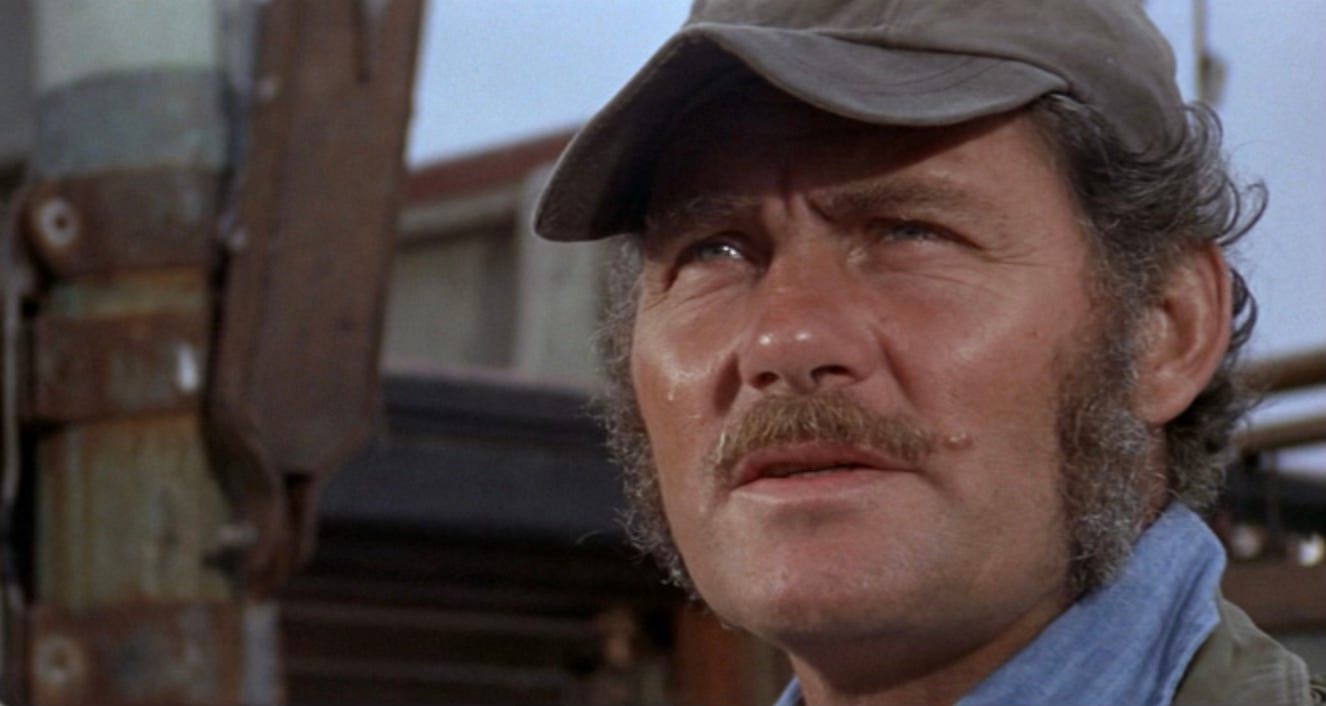
Shoard’s article even repeats a popular half-true story about Robert Shaw performing a memorable monologue in the film “Jaws” (1975) while drunk. This is a tale that gets repeated again and again. The Guardian article refers to Robert Shaw as “going method” by performing intoxicated.
The actual story from the set is that Shaw first put a great deal of work into refining the written text of the monologue, and then suggested that he perform it after having a few drinks. Unsurprisingly, this experiment did not go well and those takes were unusable. Shaw came back to film it again while nursing a hangover.
This, to conclude, is where The Guardian article and a great deal of entertainment journalism fail to uphold the craft of acting, by indulging myths that erase craft and genuine creative inspiration in favor of salacious tales of performing drunk and traumatizing other actors.
This ignores how great performances happen, and it feeds the tropes that encourage abuses by the likes of Brando, Cox, Leto and others. Journalists writing about the arts and entertainment should do better.
It’s particularly infuriating because you see talented actors produce wonderful performances without all this “Method” chicanery, or the ego-boosting shenanigans. No, your acting ability is not superior because of these, you just reveal yourself to be a hack.